Book Notes: The Story of the Herefordshire Pomona, by Bill Laws
This new book explores the history, production and impact of one of the very finest examples of Victorian-era pomology and botanical art.

This new book explores the history, production and impact of one of the very finest examples of Victorian-era pomology and botanical art.
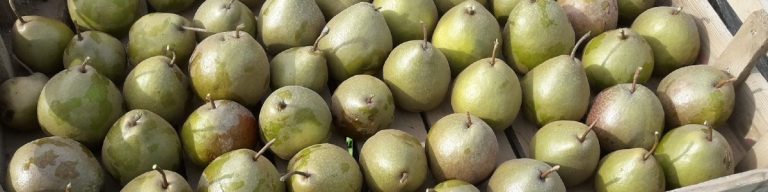
I’ve fallen down another ancient Roman research rabbit-hole, this time looking into a pear-based version of the Romans’ favourite fermented fish sauce.

Tired of the same old slice-and-scoff melon eating method? Looking for something a little different? Giles Rose has a C17th suggestion.
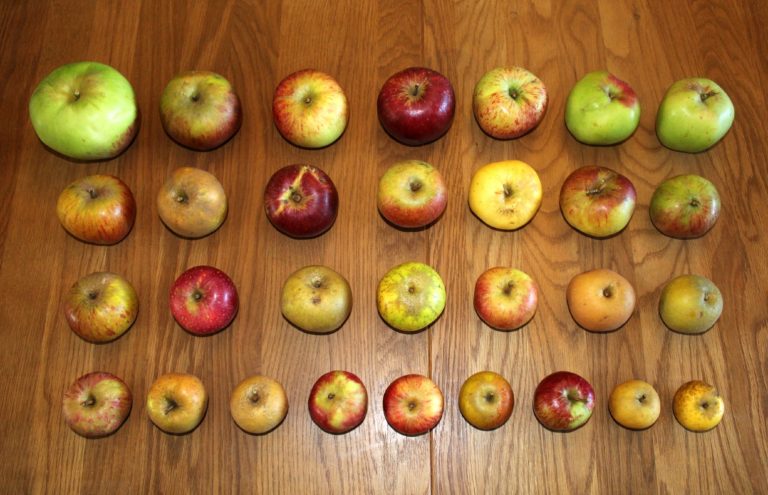
I’ve set up a page on the website that lists the varieties of fruit – mainly apples – that I’m currently growing myself, or have worked with at various sites.

We’ve got another apple that’s not true to type according to the label on the tree, but which variety could it actually be?

Yellow currants aren’t a particularly common crop, and after harvesting a few hundred berries, I think I might know why.
Here’s a recipe from the Fourme of Cury, for a pie with a filling that might sound a little unusual to modern culinary sensibilities.

I have a bit of a mystery that I’m hoping to solve. Perhaps you can help?
Anyone for an eighteenth century apricot custard recipe?
If you’ve been wondering what to do with your thinned-out, unripe grapes then wonder no more: here’s a C17th suggestion for you.

I’ve been on my travels again, visiting three more gardens with rather lovely orchard and fruit-growing spaces.

Sixteen of the twenty-four new apple trees that I grafted back in March are showing signs of life, despite the scorching sunshine.
Here’s a light, tasty apple dish that sounds perfect for a summer dessert, or an aperitif, if you hold to the author’s serving suggestion.
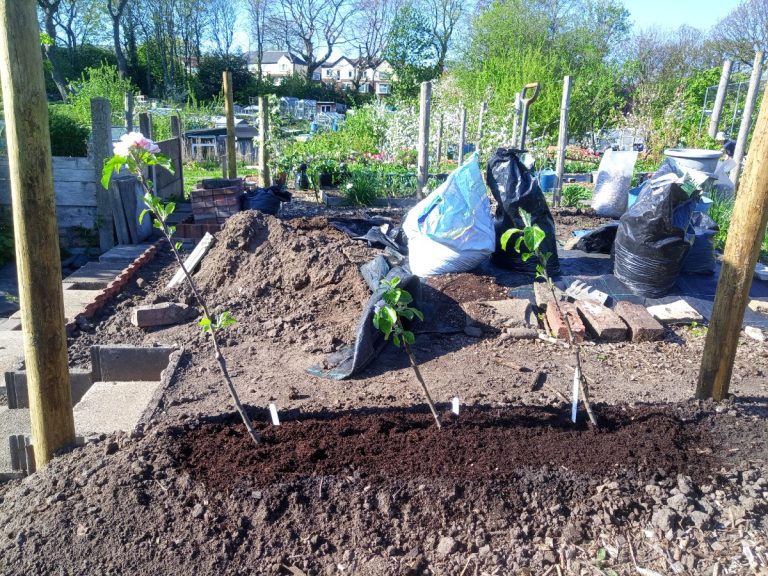
I’ve added another nine apple trees to my allotment plot, most of which will be trained as oblique cordons in the years to come.

This is my favourite method for grafting apple trees, one that I’ve found to be easier, safer and perhaps slightly more reliable than whip-and-tongue.
Here’s a C17th recipe for decorative sweetmeats made from boiled sugar and apple pulp, shaped to resemble plums.

Six years on and the two stepover apple trees on our allotment are thriving under a winter-only pruning regime.
If you’re observing Lent this year and fancy something a little different to spice up your fish days, then here’s a C16th recipe you might like to try.
Here’s an early, C17th version of a “Florentine” dish that’s much simpler than later recipes that bear the same name.
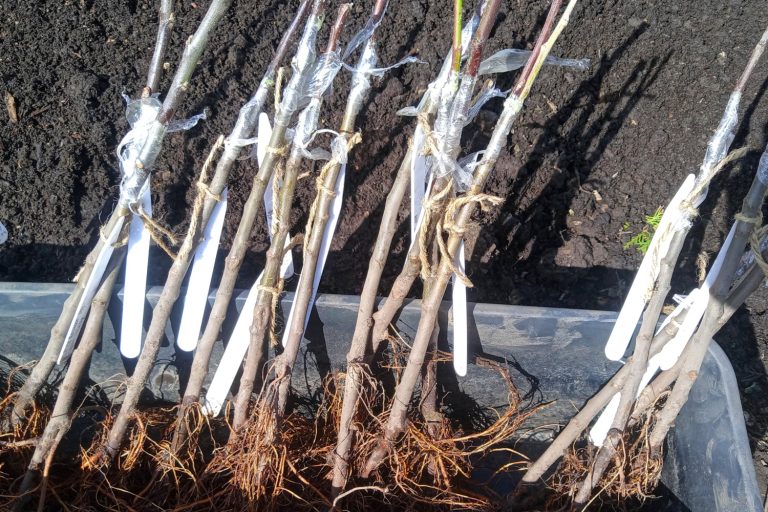
I’ll be running a three-hour session to teach the ancient, fascinating and hugely satisfying skill of apple tree grafting.