
Sir Théodore Turquet de Mayerne’s 1658 Recipe for ‘Paste of Pippins’
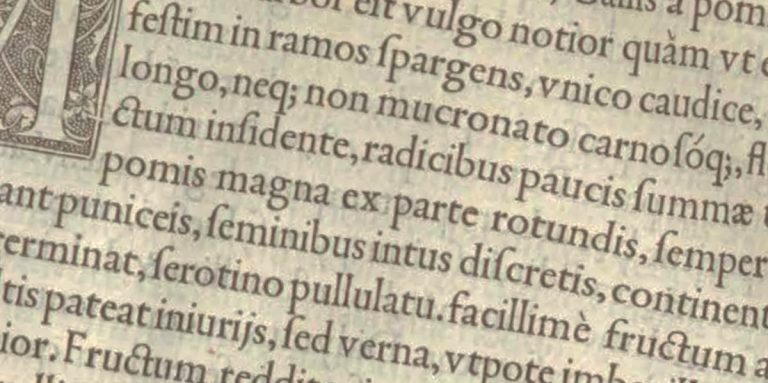
“To make paste of Pippins, some like leaves some like plums, with stalks, and stones, some white plums, and some red, and green.
Take two pound of Pippins, being pared and cut in pieces, then boyle them tender, and strain them, then take as much sugar as the pulp doth weigh and boyle it to a Candie height with, as much Rose-water, as will melt your sugar, and when your sugar is boyled to your full Candie height, then put in your pulp of Pippins, and and let it boyl awhile together, then fashion them on a pye-plate, some like leaves, and some like half-fruits, and drye them in an Oven, after you have drawne bread, the next day, turn them all close, your half-plums together, and put plum-stones between them, and stalks in the middle of them, then put them into your Oven or Stow, untill they be full dry; then you may box them, and keep them all the year, and they will look like natural green plumes, if you will have your plums look green, you must make your paste when your Pippins be green, if you will have your Pippins look red, you must put a little Conserve of Barberries amongst your Pippin-stuff, for that will colour them red, and make them have a pretty sharp taste, and you may make it all the year, if you keep the stuffe in Gally-pots, as thin as starch stuffe, and so that you season it with sugar, you may keep it for tart stuffe, whether you make it of Pippins, Pears, or Plums.”
Sir Théodore Turquet de Mayerne, Archimagrus Anglo-Gallicus (1658)
Here’s a recipe from a volume of “Excellent & Approved Receipts and Experiments in Cookery. Together with the best way of Preserving. And also; Rare Formes of Sugar-Works: According to the French Mode, and English Manner. Copied from a choice Manuscript of Sir Theodore Mayerne, Knight, Physician to the late K. Charles.”
Said Théodore de Mayerne was born in Geneva and did indeed rise to be a royal physician. He authored several works, but this particular volume isn’t listed in the official bibliography on his Wikipedia entry. Perhaps it was just a random collection of recipes that the printers / publishers compiled and then put Mayerne’s name to, three years after his death, in an effort to give their collection a gloss of respectability?
Said printers / publishers seem to have been over-fond of commas and under-fond of full-stops, but the recipe is just about legible, if you remember to add your own pauses, and describes a method for making jellied apple shapes in the form of fruits or leaves.
‘Paste’ in this context, means the same as our modern ‘pastry’, which at the time this recipe was set down would also have been referred to as ‘paste’, or ‘flour paste’. In fact, I think that, etymologically speaking, ‘pastry’ was originally a verb – the process of paste-making, in the same way that ‘cookery’ is the process of cooking – rather than a noun. But I digress.
Boiling and straining apples, then boiling sugar and adding then apple pulp, with or without colouring agents, should result in a fairly thick apple paste that can then – presumably once it has cooled and thickened – be shaped into half-plums, and accompanying leaves. These shapes should be dried in a slow (low, cooling) oven, ideally a bread oven, after the bread has been baked, and then next day they can be stuck together in pairs, with a plum stone and a plum stalk stalk in-between, to made a fruity, candied sweetmeat.
What do you think? Do you fancy making up a batch of plum-shaped candied apple treats? Or does it all sound like a bit too much work? Do let me know, via the comments.


Hi my names Susie, I have built a heritage orchard, planted Jan 2023, so this will be third summer, have found out from villages that land was an orchard belonging to the old Manor back in 15th century, mostly developed for houses since… but my apple trees seem to love the rich clay soil (hard work at the beginning) love your articles very helpful, agree no summer pruning (exceptions for me controlled tree design, and crossing or damaged rubbed branches) had last winter prune to finalise shape Dec and can’t underestimate the benefits of winter wash. They must like what I do Greensleeves gave me 21 huge apples last year on 3 year old, and my favourite Peasgood Nonsuch I grafted gave me a bumper crop 50 % used for cookers, rest left late for gorgeous sweet eaters. Will be working my way through all your articles… I started with a 1930 book by a chap called MacDonald, absolutely brilliant. love my orchard Susie
Hi Susie – Great to make your acquaintance! Always lovely to hear from a fellow orchard enthusiast. Your plot sounds fantastic, and in the footprint of a C15th manor house? Wow. I’m just thinking of the centuries of gardening and growing that could have happened there before you took custody… what a fabulous heritage to enjoy and continue to develop.
I’ve never used winter wash either; it’s meant to help destroy overwintering insects / eggs, but I suspect it does as much harm to beneficial predators as it does to pests. I do have a spot of bother with codling moth on my plot, but they over-winter on other species and are winged into the bargain, so a splash of wash won’t have any effect on them.
I thought I had a ‘Greensleeves’ on my plot, but it wasn’t true-to-type and last year I re-identified it as a ‘Delbard Jubile’, which might not be 100% accurate, but is close enough for now. ‘Peasgood Nonsuch’ sounds like a superb apple, perhaps similar to the ‘Howgate Wonder’ that I grow as a stepover.
Fingers crossed for a good growing season for both of us this year!
Hi Darren , thank you, yes dear old Peasgood Nonsuch was planted as an unknown given me by a nurseryman closing his site, when I was pregnant with my first child 42 years ago…it was left behind in my previous garden, I thought it was a Laxtons Superb….but took apples and leaves to The Shenley Apple Garden and community Orchard and they went nuts…its was a PN…they came round to confirm it and took 2 buckets of apples away plus my recipe for apple and cream flummery. Yum.. My trees were from Walcot Organic Nursery in Pershore and Pomona. My next project is to find a little small yellow skinned apples with lemon coloured flesh and a vanilla honey flavour……Best Pool..I think or so.ething like that…..I have the old Bloody Ploughman, pink flesh…I am a cook too…so I want to find age/ period appropriate apple recipes for all 29 of my trees so September is busy trying different recipes from old gardening cook books, that’s why I was so pleased to see all the lovely recipe research on your site. I make my own crab apple jelly and quince paste so far an old apple cobbler with sweet suet dumplings, and a fruit filled baked apple encased in pastry Victorian (amazing). Sorry if I ramble, but so nice and surprising to find like minded spirit…retiring to rural village is wonderful…but a bit low on the old grey matter stimulation and intelligent conversation….lovely villagers really but I walked out of my job in 2021…so going from 200 colleagues to no one is a shock…that you adjust too. Read several of the articles on you site absolutely brilliant…Will hunt out grafting books titles and authors for you.
Hi Susie – What a lovely discovery to make. ‘Peasgood Nonsuch’ had a great reputation back in the day, but Bramley’s Seedling became so popular from the early C20th onwards that a lot of the older cooking varieties fell out of favour and some of them disappeared completely, which is a real shame.
I think the yellow-skinned apple you’re describing might not be ‘Bess Pool’ after all… the photos on the National Fruit Collection website show a red-skinned variety instead… We do grow a very lovely yellow apple at work, ‘Pitmaston Pine Apple’, and there are a couple of others that might fit the bill.
I had a ‘Bloody Ploughman’ tree at my previous house, but it never fruited. Probably because some fool (me!) had planted it in the rain shadow of an enormous Sycamore. We moved out 10 years ago now. I wonder if the new owners kept it going..?
And please do feel free to ramble away, I’m always happy to chat about apples! Or pears, or plums, or medlars, or cherries, or absolutely anything fruit related 😀